Architectural Layers
FOSPS is structured using a three-layer architecture that separates concerns and enables modularity.
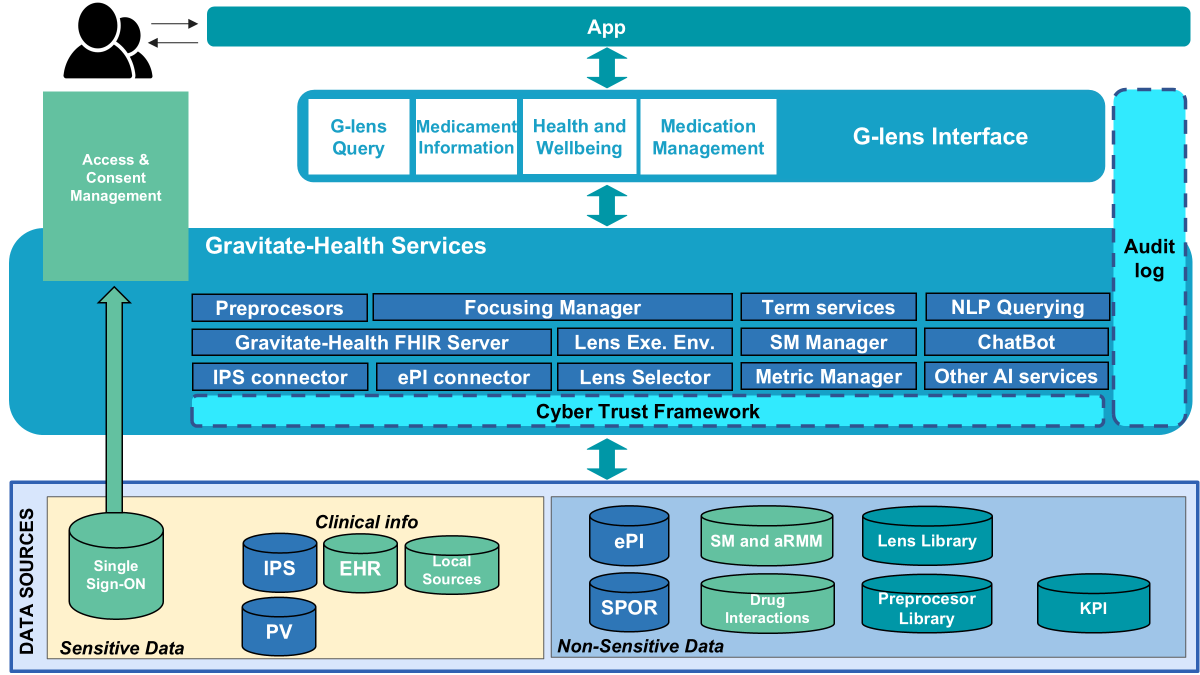
The Three Layers
1. App Layer
The front-end layer containing:
- Patient-facing applications
- Healthcare professional (HCP) interfaces
- Administrator web interfaces
- Developer tools and dashboards
Examples:
2. Service Layer
The core operations layer housing:
- Processing and analysis components
- AI services and NLP services
- Connectors to data sources
- Orchestration services
Key Components:
3. Data Layer
The storage layer containing:
- FHIR Servers for standardized resources
- Sensitive data (e.g., patient IPS)
- Non-sensitive data (e.g., public ePI)
- Lenses and Supporting Material
Benefits of This Architecture
- Separation of Concerns: Each layer has distinct responsibilities
- Scalability: Layers can scale independently
- Modularity: Components can be developed and deployed separately
- Flexibility: Easy to swap implementations within layers
Deployment
Each layer is deployed using:
- Kubernetes for orchestration
- Istio for service mesh
- Helm Charts for packaging
Related Concepts
- FOSPS - Overall platform architecture
- Focusing Manager - Service layer orchestration
- FHIR Server - Data layer storage